
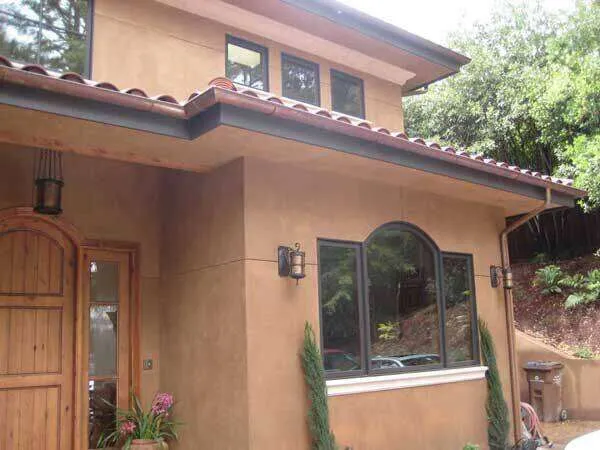
A facade decision tends to show up at a specific moment: the old finish is cracked or dated, a repaint estimate just came in, or a new build is at the stage where the exterior skin has to be chosen. Somewhere in that conversation, venetian plaster usually enters the picture. The polished, layered look has moved from interior feature walls to building exteriors, and it can make a plain elevation look like cut stone when it’s done right.
But exterior work is a different animal than a dining room accent wall. Outside, the finish has to live with sun, wind-driven rain, settling, and whatever the drainage details behind it are doing. Choosing exterior venetian plaster is less about whether you like the look — most people do — and more about whether the budget, the building, and the maintenance expectations line up.
This guide walks through the factors that actually decide it: cost, where the finish works best on a building, how it holds up, what the calendar looks like, and when a conventional stucco finish is the smarter call.
What Exterior Venetian Plaster Actually Is
Venetian plaster is a trade name for lime-based decorative plasters applied in thin, burnished layers. The applicator builds up multiple passes with a trowel, compressing each one, which is what creates the depth and subtle movement in the surface. Exterior versions of these systems are formulated to handle weather better than interior products, but the principle is the same: thin decorative coats over a sound substrate.
That last part matters more outside than inside. On a facade, venetian plaster is a finish, not a waterproofing system. What keeps the wall dry is the assembly behind it — the weather barrier, flashing, and drainage details. The plaster itself sheds most water at the surface, but it should never be treated as a sealed skin. If the drainage plane behind the finish is compromised, no decorative coat will save the sheathing underneath it.
So the first honest question isn’t about the finish at all. It’s whether the wall behind it is ready:
- Is the existing stucco or base coat sound, or is it cracked, hollow-sounding, or stained from moisture?
- Are the flashings at windows, parapets, and penetrations doing their job?
- Is there a continuous base coat flat enough to accept thin decorative layers?
If any of those answers is shaky, repair and prep come first, and that changes the budget conversation below.
Budget: Where Venetian Plaster Sits on the Cost Curve
Exterior venetian plaster is a premium finish, and the cost driver is labor. Each burnished coat takes skill and time, and exterior elevations are large, often tall, and frequently require scaffolding. Compared to a standard color-coat stucco finish or paint over existing stucco, expect the decorative route to cost meaningfully more per square foot — how much more depends on the product system, the number of coats, access, and how much substrate prep the wall needs.
There are a few ways owners manage that:
- Use venetian plaster selectively — the street-facing elevation, an entry surround, or a courtyard wall — and finish secondary elevations in a complementary smooth stucco.
- Choose a simpler texture or fewer polish passes; not every decorative lime finish needs a mirror burnish.
- Budget the substrate repair honestly up front, since skipping prep to afford the finish coat is how premium finishes fail early.
If the whole-building budget only works by cutting the base coat repair or the flashing corrections, that’s a sign venetian plaster isn’t the right fit for this project — or at least not for the whole facade.
Which Facades and Exposures Suit It Best
Not every elevation treats a decorative finish the same way. Walls with deep overhangs, covered entries, and courtyard exposures are kinder to burnished lime finishes because they see less direct wetting. Fully exposed walls that take wind-driven rain head-on, parapet walls without proper caps, and surfaces near sprinklers or constant splash are harder environments for any fine finish.
Around the Northern San Francisco Bay Area, that usually translates to a few practical patterns. Coastal and hilltop sites with heavy fog and salt exposure ask more of the finish and the maintenance plan. Sheltered inland elevations are more forgiving. South- and west-facing walls take the most sun, which affects how richer integral colors age.
Architecturally, venetian plaster rewards clean, simple massing. Broad uninterrupted wall planes show off the depth of the finish; busy elevations chopped up by trim and siding transitions dilute the effect and multiply the detailing work. If the building is Mediterranean, modern, or Spanish-influenced, the finish tends to look like it belongs. On a facade with lots of competing materials, a quieter smooth stucco may read better.
Durability and Maintenance: What to Expect Over Time
Done over a sound base with proper details, lime-based exterior finishes can be one of the more durable decorative options, and lime plasters have a long history on buildings in harsher climates than ours. But durability is conditional, and it helps to know what actually degrades these finishes:
- Movement in the substrate — hairline cracks in the base coat telegraph through thin decorative layers, so control joints and crack repair matter before the finish goes on.
- Water concentration — failed caps, clogged gutters, and missing kickout flashings dump water onto small areas of wall and stain or erode the finish there first.
- Impact and abrasion — burnished finishes at ground level near walkways, parking, or landscaping equipment take scuffs that textured stucco hides better.
Maintenance is real but modest on a well-detailed wall: periodic inspection, gentle cleaning, and prompt attention to any cracks or staining so moisture doesn’t work behind the finish. Some systems take a protective sealer that needs renewal on a schedule the manufacturer sets. No exterior finish is maintenance-free, and anyone selling venetian plaster as set-and-forget is overselling it. The honest comparison: it asks for more attention than a rough-textured color coat, and it pays that back in appearance.
Timing and How the Work Actually Sequences
Exterior venetian plaster is weather-sensitive work. Application and the early set of lime-based coats are affected by temperature, direct sun, wind, and rain, so applicators plan around conditions — shading hot walls, protecting fresh coats from wetting, and following the product manufacturer’s temperature and recoat requirements for the specific system being used. In the Bay Area, dry summers offer long stable stretches, while winter rains mean more protection and more flexibility in the schedule. Neither season rules the work out; conditions on the wall on the day of application are what matter.
Expect the project to sequence roughly like this: assessment of the existing wall, substrate repair and any flashing or waterproofing corrections, base coat work, then the decorative coats in multiple passes with the intervals the product system requires. Whole-project duration depends on scope, access, substrate condition, and weather windows — which is exactly why a site visit beats any generic timeline.
Choose Your Facade Finish With Clear Eyes
Here’s the plain recommendation. Exterior venetian plaster is a strong choice when the substrate is sound or being properly repaired, the budget covers real prep plus skilled application, the elevation suits a refined finish, and you’re willing to give it periodic attention. It’s the wrong choice when the budget forces shortcuts on the base coat or flashings, when the wall takes constant abuse at ground level, or when the building’s style fights a polished surface. In those cases, a quality smooth or textured stucco finish delivers better long-term value — and the door stays open to upgrade a feature elevation later.
Either way, the decision gets easier with someone looking at the actual wall. One Stop Plastering handles venetian plaster, stucco, meshing, and waterproofing for residential and commercial buildings throughout the Northern San Francisco Bay Area — explore the full range of plastering and stucco services, or browse the project portfolio to see what different finishes look like on real facades.